Daily Care Tips to Make Your Front Tooth Filling Last Longer
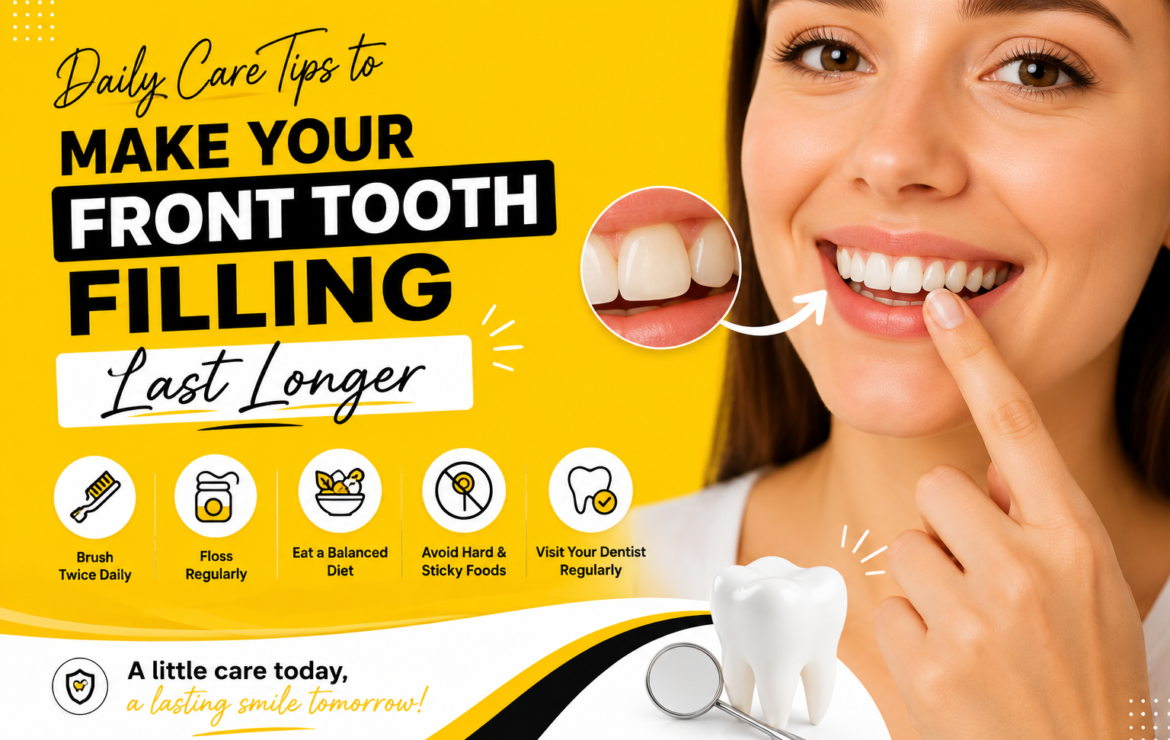
Daily Care Tips to Make Your Front Tooth Filling Last Longer

Best Habits for Long-Lasting Dental Fillings
- Front tooth fillings restore chipped or decayed teeth using natural-looking composite resin that blends seamlessly with your smile.
- Brushing twice daily, flossing regularly, and using fluoride products help protect fillings from decay, staining, and early damage.
- Avoid hard foods, sticky candies, smoking, nail biting, and acidic drinks because they can weaken or crack composite fillings over time.
- Mild sensitivity after a tooth filling procedure is common, but pain, rough edges, or discoloration may indicate the filling needs replacement.
- Regular dental check-ups and professional cleanings help extend the lifespan of front tooth fillings and maintain long-term oral health.
A front tooth filling is uniquely unforgiving.
It’s under constant pressure from biting, fully visible every time you smile, and made from a material that stains and wears if you’re not careful.
The good news is that with the right daily habits, a composite front tooth cavity filling can last a decade or more.
This guide covers everything you need: care tips, aftercare, foods to avoid, costs, and when it’s time for a replacement.
What Is Front Tooth Filling?
A front tooth filling is a restorative dental treatment used to repair decay, chips, or minor damage on the anterior (front-facing) teeth.
Because these teeth are visible, dentists use tooth-colored materials that blend naturally with surrounding enamel, making the restoration invisible to the naked eye.
The tooth filling procedure for front teeth is generally less invasive than for back teeth, since the cavities tend to be smaller and easier to access.
However, aesthetic precision is a priority here.
The material must be carefully matched to the exact shade of your natural tooth and shaped to preserve the tooth’s original contour and bite.
Common Tooth Filling Materials Used for Front Teeth
The choice of tooth filling material for front teeth is almost always composite resin, and for good reason. Here’s how the main options compare:
- Composite Resin: A blend of plastic resin and fine glass particles, composite is the most widely used material for front teeth because it can be shaded to match your enamel almost perfectly. It bonds directly to the tooth structure, requiring minimal removal of healthy tooth tissue.
- Glass Ionomer Cement: Occasionally used for small lesions near the gum line, glass ionomer releases fluoride that helps prevent further decay. It’s less aesthetic than composite and generally less durable, so it’s reserved for specific clinical situations.
- Porcelain (Ceramic): For larger restorations, porcelain inlays may be considered. They’re highly stain-resistant and durable, but are costlier and usually require more than one appointment.
Why Front Tooth Fillings Need Extra Care
Front teeth are involved in biting, tearing, and cutting food, which puts them under constant but less predictable pressure.
Habits like biting your nails, chewing on pen caps, or opening packaging with your teeth all place undue stress on front tooth fillings, making them more vulnerable to cracking or dislodging.
Also, they’re more visible, so even minor discoloration or a small chip becomes noticeable immediately.
Daily Care Tips to Make Your Front Tooth Filling Last Longer
These are evidence-based habits that we at D’Arcy Dental consistently recommend to our patients for protecting composite restorations:
- Brush twice daily using a soft-bristled toothbrush and fluoride toothpaste.
- Floss once a day, paying careful attention to the margins around the filling.
- Avoid alcohol-based mouthwashes. Alcohol can soften composite resin over time, increasing the risk of surface degradation. Opt for an antibacterial, alcohol-free rinse instead.
- Use a fluoride mouthwash if your dentist recommends it, as fluoride helps strengthen the surrounding enamel and reduces the risk of new decay developing around the filling margins.
- Limit foods and drinks that stain, including coffee, tea, red wine, and dark berries.
- If you grind or clench your teeth — a condition called bruxism — ask your dentist about a custom night guard.
- Visit your dentist at least every six months for a professional cleaning and filling check.
Tooth Filling Aftercare: What to Do Immediately After the Procedure
The first 24 to 48 hours after a tooth filling procedure are particularly important.
Composite resin is hardened with a curing light during the appointment, so it is technically set immediately
But the tooth and surrounding gum tissue still need a short recovery period.
Here’s what to keep in mind:
- Wait at least two hours before eating after your appointment, and when you do eat, start with soft foods. Avoid anything particularly hard, crunchy, or sticky for the first day or two.
- Some tooth sensitivity to hot, cold, or sweet foods is completely normal in the days following the procedure. This usually subsides within a week. If sensitivity persists beyond two weeks or worsens, contact your dental office.
- Do not use your teeth to tear open packages, bite your nails, or chew on hard objects like ice or hard candy in the days after the filling — and ideally, avoid these habits permanently.
- Avoid extremely hot or cold beverages for the first 24 hours to minimize sensitivity while the tooth settles.
Foods and Habits That Can Damage Front Tooth Fillings
Being mindful of what you eat and how you use your teeth is one of the most practical ways to extend the life of a front tooth filling. The following are known to cause premature damage:
- Hard foods such as raw carrots, hard candies, crusty bread, and ice can cause composite fillings to chip or crack.
- Sticky foods like caramel, toffee, and dried fruit can dislodge fillings, particularly if the adhesive bond has weakened slightly with age.
- Acidic foods and drinks, including soda, citrus juice, and vinegar-heavy dressings, gradually erode enamel around the filling margins, making them more vulnerable to secondary decay.
- Smoking or tobacco use can stain composite resin significantly and has been shown to compromise overall oral health, which in turn affects the longevity of any dental restoration.
- Using your front teeth as tools — opening chip bags, tearing tape, biting thread — places sudden, lateral stress on fillings that they aren’t designed to handle.
What Is the Average Tooth Filling Cost?
Tooth filling cost in Canada varies based on the material used, the size of the cavity, and the number of tooth surfaces involved. Based on current data from Canadian dental sources, here is a general breakdown:
- Composite (tooth-coloured) fillings: approximately $150 to $500 per tooth, depending on the size and complexity of the restoration.
- Amalgam (silver) fillings: approximately $150 to $300 per tooth, though these are rarely recommended for front teeth.
- Ceramic or porcelain fillings: $450 to $1,200 or more, typically used for larger restorations.
Most dental insurance plans in Canada cover between 50% to 80% of the cost of standard fillings.
Check with your provider to understand what your plan covers, as some plans may categorize composite fillings for front teeth differently than amalgam.
At D’Arcy Dental, we can help you understand your coverage and provide transparent pricing before any treatment begins.
If you need urgent care, our emergency dental clinic is equipped to address filling-related emergencies promptly.
When Should You Replace a Front Tooth Filling?
Composite fillings are not permanent, and there are clear signs that a replacement is due. Knowing what to look for allows you to seek care before the situation worsens:
- Visible discoloration or darkening around or within the filling, which can indicate staining or secondary decay developing beneath the surface.
- A rough or uneven edge on the filling that you can feel with your tongue, suggesting wear or a minor chip.
- Increased sensitivity to temperature or pressure at the filled tooth, which may indicate the filling has cracked or its seal has broken.
- A loose or wobbly sensation in the tooth, which should be evaluated by a dentist as soon as possible.
- Pain when biting down, which could indicate the filling is cracked, misaligned, or that decay has developed nearby.
With proper care, composite front tooth fillings can last anywhere from 5 to over 10 years.
If you’re ever unsure about the state of an existing filling, a routine dental exam will help your dentist assess it thoroughly.
Professional Dental Tips to Protect Front Tooth Fillings
Beyond daily home care, there are professional measures that make a meaningful difference in how long your filling lasts:
- Schedule professional cleanings every six months.
- Ask about fluoride treatments if you have a history of frequent cavities.
- If your bite has changed due to tooth movement, jaw issues, or other dental work, have your dentist assess whether your filling needs to be reshaped to distribute pressure evenly.
- In cases of significant tooth grinding (bruxism), your dentist may recommend wearing a custom occlusal guard at night.
- If your filling becomes dislodged or severely damaged outside of regular business hours, don’t delay, contact an emergency dental clinic right away.
Leaving a broken or missing filling untreated exposes the underlying tooth structure to bacteria and has a risk of infection.
Conclusion
A front tooth filling is an investment in both your oral health and your confidence, and like any investment, it benefits from regular care.
Combining good daily hygiene habits with regular professional check-ins can significantly extend the life of your restoration.
If you’re in the Okotoks area and have questions about a front tooth cavity filling or need aftercare guidance following a recent procedure, our team at D’Arcy Dental is here to help.
You don’t have to wait for a problem to visit us — preventive care is always the most cost-effective approach.
FAQs
How long does a front tooth filling last?
Composite resin fillings on front teeth typically last 5 to 10 years, and often longer with consistent oral hygiene and regular dental check-ups.
Why does my front tooth filling feel sensitive?
Some sensitivity after a tooth filling procedure is normal and usually fades within a week. If it persists beyond two weeks, have your dentist check the fit and bite alignment.
What foods should I avoid after a tooth filling?
For the first 48 hours, avoid anything hot, cold, hard, or sticky; long-term, limit acidic drinks, hard candies, and heavily pigmented foods like coffee and red wine.
Is the tooth filling procedure painful?
The procedure is performed under local anesthesia, so there’s no pain during treatment. Mild soreness afterward is common but typically resolves within a day or two.
How often should dental fillings be replaced?
Fillings are replaced based on signs of wear or failure, not a fixed schedule. Your dentist will assess them at routine check-ups and recommend replacement only when necessary.

Dr. Tejas Patel
Dental Specialist
Dr. Tejas Patel is a passionate dentist dedicated to providing patient-focused care with a gentle approach. A dentistry graduate of 2012, he has been practicing in Calgary since 2017 and offers treatments including crowns, root canals, extractions, bone grafting, and TMD care. He is known for his empathetic nature and focus on educating patients for long-term oral health.
Related posts