
Important Facts to Know Before Invisalign Treatment Starts

Important Facts to Know Before Invisalign Treatment Starts

Important Facts to Know Before Invisalign
- Invisalign straightens teeth discreetly using custom clear aligners.
- Best for mild to moderate alignment and bite correction cases.
- Aligners must be worn 20–22 hours daily for effective results.
- Eating requires removal, with strong focus on daily oral hygiene.
- Mild pressure is normal and shows teeth are shifting correctly.
- Retainers and regular check-ups are key to long-lasting results.
Straightening your teeth doesn’t have to mean hiding your smile for months or avoiding your favorite foods.
Invisalign offers a discreet, flexible way to get the results you want.
Still, there’s more to it than just popping in a pair of clear trays. Understanding what’s ahead can help you start your treatment with confidence.
Here, we tell you exactly what you need to know before starting your Invisalign journey.
What Is Invisalign and How Does It Work?
Invisalign teeth straightening is a type of orthodontic treatment that uses clear, removable aligners instead of traditional braces.
Every aligner set is designed specifically for your mouth and is typically worn for one to two weeks before moving on to the next set.
The aligners apply gentle, consistent pressure, gradually shifting your teeth into their ideal positions.
Because they are clear, Invisalign aligners are far less noticeable than metal brackets.
This makes them a good alternative for adults and teens who want to straighten their teeth discreetly.
Who Is a Good Candidate for Invisalign Treatment?
Invisalign can work well for mild to moderate orthodontic concerns, such as:
- Crowding
- Gaps between teeth
- Minor bite issues like overbite, underbite, or crossbite
It may not be suitable for every case, especially if complex jaw movements or severe misalignments are involved.
The dentist will carry out a thorough evaluation using X-rays and digital scans to see if Invisalign is suitable for your needs.
Patients who succeed with Invisalign usually:
- Commit to wearing the aligners 20–22 hours a day
- Maintain good oral hygiene
- Attend regular dental check-ups
- Follow their treatment plan closely
Important Facts to Know Before Starting Invisalign
If you’ve never worn orthodontic aligners before, here are a few things that might surprise you once you start:
- Wearing them is a commitment
Because Invisalign aligners can be removed, it’s tempting to take them out “just for a bit.” But every hour they’re not in your mouth slows your progress. To stay on track, you’ll need to wear them for 20–22 hours a day, all day except when you’re eating, drinking, or brushing.
- Meals and snacks work a little differently
When you wear clear aligners, no food is off-limits. The catch? You’ll need to remove your aligners whenever you eat or drink anything except water. This also means you’ll be brushing or rinsing your teeth more frequently to keep your mouth and aligners clean.
- Cleanliness is a daily habit
Think of your aligners as an extension of your teeth. They need gentle brushing and rinsing at least twice a day to keep them fresh and clear. Skipping this can lead to cloudiness or odour.
- Retainers are forever friends
Once you’ve reached your final aligner, your teeth will look great, but they’re still at risk of shifting. Wearing retainers after treatment is what locks in your results for the long term.
- Mild discomfort means it’s working
When you first switch to a new aligner, you may feel pressure on your teeth. It’s not sharp pain, but more like the sensation after tightening traditional braces. This usually fades in a couple of days.
- The cost isn’t one-size-fits-all
Invisalign costs vary depending on the duration of your treatment and the complexity of your case. Your dentist can give you an exact figure and talk through payment or insurance options.
- Check-ups keep things on track
Even though you’re not wearing braces, you’ll still have regular dental visits to make sure your teeth are moving as planned. These appointments are key to avoiding delays.
What to Expect During Your First Few Weeks
During the first days, your aligners may feel snug, and speaking might require slight adjustment. Your mouth will adapt quickly, and most patients become used to wearing them within a week. You might notice increased saliva at first, but this is temporary.
It’s also common to experience mild pressure when moving to the next aligner set; this is a sign the treatment is working.
Sticking to your schedule and following your dentist’s advice will help you adjust smoothly.
What to Do If You Experience Issues
If an aligner cracks, becomes distorted, or feels uncomfortable in a way that doesn’t improve after a couple of days, contact your dentist.
Losing an aligner can also affect your progress, so keep your previous set as a backup until you get a replacement.
In rare cases, unexpected pain, swelling, or signs of infection may occur.
If this happens, reach out to your dentist promptly. If you can’t reach them right away, an emergency dental clinic can provide immediate care and advice.
Why Choose Us for Invisalign Treatment?
Invisalign teeth offer a discreet, flexible way to improve your smile, but success depends on preparation, commitment, and regular dental guidance.
The more you understand the process before starting, the smoother your journey will be.
If you’re ready to explore how invisible brace options can work for you, book a consultation with D’Arcy Dental today.
Our team can assess your needs, answer your questions, and guide you toward a healthier, straighter smile with confidence.
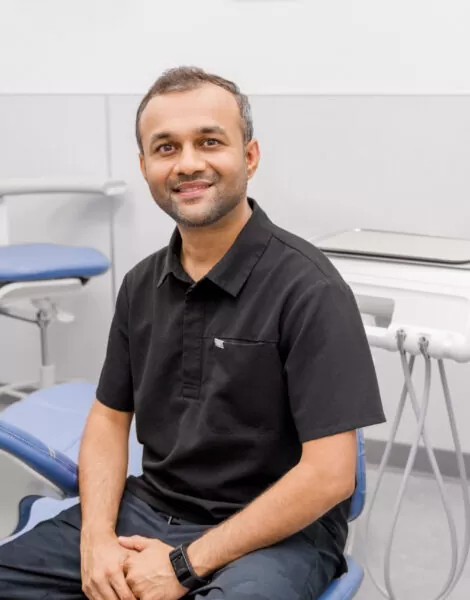
Dr. Dharmanshu Boghara
Dental Specialist
Dr. Boghara is a skilled dentist with over 15 years of experience, focused on delivering personalized and high-quality dental care. A graduate of Dharmsinh Desai University, he keeps his skills updated with modern techniques. Practicing in Calgary since 2014, he specializes in complex rehabilitations, prosthetic dentistry, and implant solutions. He is known for his calm and patient-friendly approach.
Related posts


