Quick and Easy Tips for Handling Dental Emergencies the Right Way

Quick and Easy Tips for Handling Dental Emergencies the Right Way

Tips for Handling Dental Emergencies the Right Way
- Know dental emergencies like pain, bleeding, or broken teeth need quick professional care.
- Act fast—rinse gently, use cold compress, and store knocked-out teeth safely in milk.
- Call your emergency dentist in Okotoks right away to prevent pain, infection, or tooth loss.
- Avoid mistakes—don’t delay care, use glue, sharp tools, or skip your follow-up visit.
- Use safe home remedies like saltwater rinse or cold compress for short-term pain relief.
- Prevent issues—brush, floss, get checkups, wear a mouthguard, and avoid chewing hard foods.
Dental emergencies can happen anytime.
During a meal, at work, or even in the middle of the night.
Whether it’s a sudden toothache or a broken crown, knowing what to do in those first few minutes can make all the difference.
Quick action can prevent further damage, reduce pain, and save the tooth.
If you ever face a dental emergency, act fast.
Here’s a practical guide to help you manage common dental crises until you can reach your dentist.
What Counts as a Dental Emergency?
The Canadian Dental Association (CDA) defines dental emergencies as conditions requiring immediate treatment to stop bleeding, relieve intense pain, save a tooth, or prevent the spread of infection.
Here are examples of common dental emergencies:
- Severe toothache: Continuous pain that cannot be relieved by over-the-counter medication.
- Knocked-out tooth: A permanent tooth displaced from its socket due to trauma.
- Broken or chipped tooth: Even a minor crack can expose the inner layers of the tooth, causing sensitivity, infection risk or further damage.
- Lost filling or crown: When the protective covering is gone, the underlying tooth is vulnerable to decay and infection.
- Bleeding gums or injury to soft tissue: Cuts, lacerations or uncontrolled bleeding in the gums, lips or tongue.
When to contact a dentist immediately
If you encounter any of these signs, call your dentist right away:
- Pain that wakes you or lasts more than 24 hours
- Teeth knocked out, fractured or dislodged
- A missing piece of a tooth or a crown
- Swelling or pus near teeth or gums
Quick Steps to Take Before Seeing a Dentist
Here’s what to do immediately during a dental emergency, and what not to do.
Knocked-Out Tooth
- Pick it up carefully by the crown, not the root.
- Rinse it gently with clean water if it is dirty.
- Try to place it back in the socket, or keep it in milk or your cheek until you reach a dentist.
Broken or Chipped Tooth
- Rinse your mouth with warm water to remove debris.
- Apply a cold compress to the outside of your cheek to minimize swelling.
Toothache
- Gently clean around the sore area with warm water.
- Use a saltwater rinse to reduce inflammation.
- Avoid placing aspirin directly on gums; it can cause burns.
Bleeding Gums or Lip Injury
- Apply gentle pressure with a clean gauze pad or cloth.
- If bleeding doesn’t stop after 10–15 minutes, seek immediate care.
Avoid using household glue, ignoring pain, or delaying treatment. These can worsen the condition.
Book an emergency dental appointment at Darcy Dental today for expert care in Okotoks.
Home Remedies That Actually Help
While home remedies can provide short-term relief, they’re not a substitute for professional care. Use these safe, dentist-approved methods while waiting for your appointment:
- Saltwater rinse: A natural disinfectant that helps reduce bacteria and swelling.
- Cold compress: Useful for reducing swelling and numbing mild pain.
- Clove oil or dental gel: Offers temporary relief for mild discomfort.
- Stay hydrated: Dry mouth can worsen irritation. Avoid sugary or hard foods until treated.
Remember, these remedies only buy time until a dentist can properly address the issue.
Once your pain is under control, schedule a visit with your emergency dentist in Okotoks to identify and treat the root cause.
When to Call an Emergency Dentist
While some dental problems can wait a day or two, others require immediate professional care to prevent lasting damage or infection.
Here are clear signs that it’s time to seek emergency dental care:
- Unbearable tooth pain lasting over a day
- Facial swelling or visible pus near the gum line
- A knocked-out permanent tooth
- Bleeding that won’t stop
If any of these signs appear, don’t delay. Contact your emergency dentist in Okotoks promptly to get fast, professional treatment and prevent complications.
Mistakes People Commonly Make During Dental Emergencies
Waiting too long to call a dentist
Many people think the pain will disappear on its own. However, tooth pain or swelling rarely improves without treatment. A small cavity or minor injury can quickly turn into a serious infection.
Instead, do this: If you’re in pain or notice swelling, call your dentist immediately. Most dental clinics, including D’Arcy Dental in Okotoks, keep emergency slots open to help patients the same day.
Applying painkillers directly to the tooth or gums
Some online sources suggest placing aspirin or other painkillers directly on the sore area. This can burn the soft tissues and cause more discomfort.
Instead, do this: Use cold compresses or over-the-counter pain relief as directed instead.
Using household glue to fix a broken crown or filling
When a filling or crown falls out, some people attempt quick fixes using household glue or superglue. These adhesives contain toxins that can damage the remaining tooth structure.
Instead, do this: Store the crown safely and bring it to your dentist.
Ignoring small chips or cracks
A minor chip might not cause pain right away, but it can expose the enamel to bacteria and lead to decay or infection. Over time, the damage may worsen, requiring more complex treatment such as a root canal or crown.
Instead, do this: Schedule a quick dental exam even if the damage seems small.
Using sharp objects to dislodge food
It might seem harmless to use a pin, toothpick, or even fingernails to remove stuck food, but this can scratch enamel and injure the gums.
Instead, do this: Gently floss the area or rinse with warm water.
Skipping the follow-up appointment
After an emergency visit, many patients feel relieved once the pain subsides and skip the follow-up appointment. This can leave underlying issues untreated.
Instead, do this: Always attend the follow-up visit. Your dentist will check the healing progress and ensure no infection or damage remains.
How to Prevent Future Dental Emergencies
Prevention is the simplest and most effective emergency plan.
Here’s how to protect your teeth and avoid sudden dental troubles:
- Brush twice daily and floss regularly to remove plaque and bacteria.
- Schedule professional cleanings every six months to detect early problems.
- Use a mouthguard if you grind your teeth or play contact sports.
- Avoid chewing ice, pens, or hard candies, as they can cause cracks or fractures.
Why Choose Us During Dental Emergencies
Being prepared makes a huge difference during dental emergencies.
Acting quickly and knowing what to do can save your smile and reduce the risk of complications.
Keep your dentist’s contact handy, and remember: when in doubt, get checked.
Contact D’Arcy Dental for reliable emergency dental care in Okotoks.
Our experienced team is ready to help you protect your smile, no matter when an emergency strikes.
FAQ Section
What should I do first in a dental emergency?
Stay calm and assess the situation. If there’s bleeding, apply gentle pressure. For severe pain or knocked-out teeth, contact your emergency dentist immediately.
How can I stop severe tooth pain immediately?
Rinse with warm salt water and take an over-the-counter pain reliever. Avoid placing painkillers directly on your gums.
How can I stop bleeding from a broken tooth or gum injury?
Apply a clean gauze pad with light pressure. If bleeding continues after 15 minutes, seek emergency dental care.
How do I reduce swelling after a dental injury?
Use a cold compress on the affected area for 10–15 minutes at a time. Avoid heat, which can increase swelling.
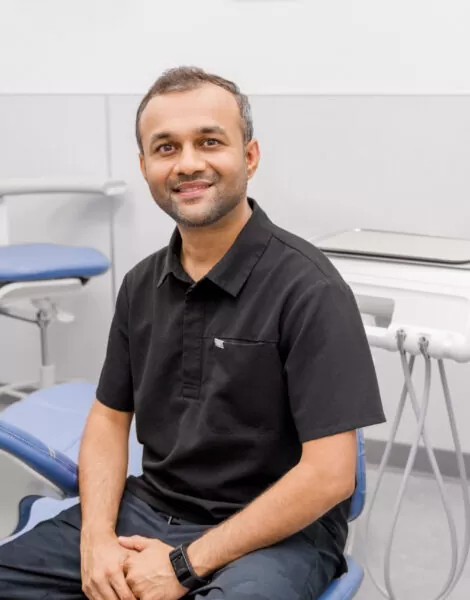
Dr. Dharmanshu Boghara
Dental Specialist
Dr. Boghara is a skilled dentist with over 15 years of experience, focused on delivering personalized and high-quality dental care. A graduate of Dharmsinh Desai University, he keeps his skills updated with modern techniques. Practicing in Calgary since 2014, he specializes in complex rehabilitations, prosthetic dentistry, and implant solutions. He is known for his calm and patient-friendly approach.
Related posts