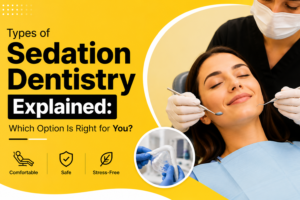
Sedation Dentistry vs Traditional Dental Procedures: What’s the Difference?

Sedation Dentistry vs Traditional Dental Procedures: What’s the Difference?

Difference Between Sedation Dentistry and Traditional Dental Care
- Sedation dentistry helps patients feel calm and relaxed during dental procedures, while traditional dentistry mainly relies on local anesthesia to block pain.
- Patients receiving sedation dentistry may feel drowsy or remember very little of the procedure, whereas traditional dental treatment keeps patients fully awake and alert.
- Sedation dentistry is ideal for people with dental anxiety, strong gag reflexes, low pain tolerance, or those undergoing lengthy or complex dental treatments.
- Traditional dental procedures are commonly recommended for routine cleanings, fillings, and simple treatments that require only localized numbing and minimal recovery time.
- Both sedation dentistry and traditional anesthesia are considered safe when performed by qualified dental professionals who assess medical history and patient comfort needs.
When undergoing a dental procedure, patients often have two primary concerns: pain and anxiety.
Fortunately, modern dentistry offers sophisticated solutions for both.
For decades, local anesthesia has been the reliable standard for pain control.
However, for the millions who experience intense dental phobia or require extensive treatments, a newer, more holistic approach called sedation dentistry offers a profoundly different experience.
Understanding the fundamental difference between these two paths—one focused purely on numbing sensation, the other on calming the mind—is key to choosing the right option for your next visit to the dentist.
What Is Sedation Dentistry?
Sedation dentistry is the practice of using medication to help a patient relax during a dental procedure.
The goal is not always to induce full sleep (though general anesthesia is an option), but to create a deeply relaxed, anxiety-free state.
The level of sedation varies depending on the patient’s needs and the complexity of the treatment:
Minimal Sedation: The patient is awake but deeply relaxed. This is often achieved using Nitrous Oxide (laughing gas), which is inhaled through a mask and wears off quickly.
Moderate Sedation (Conscious Sedation): The patient is conscious, but may slur their words and is unlikely to remember much of the procedure. This is most commonly administered via Oral Sedation (a pill taken before the appointment) or Intravenous (IV) Sedation, which is injected for a faster and deeper effect.
What Are Traditional Dental Procedures?
Traditional dental procedures rely on local anesthesia to manage pain.
This is the classic method most people are familiar with: an injection that blocks nerve signals in a localized area of the mouth.
Local anesthesia is highly effective at eliminating physical pain, ensuring that while you may feel pressure, you will not experience discomfort in the specific tooth or area being worked on.
The patient remains completely awake and fully aware throughout the entire procedure.
Common agents like Lidocaine or Articaine are injected directly into the gum tissue, and the numbing effect typically sets in within minutes, often lasting for several hours after the procedure is complete.
Key Differences Between Sedation Dentistry & Traditional Dentistry
| Feature | Sedation Dentistry | Traditional Dentistry |
|---|---|---|
| Primary Goal | Anxiety relief, relaxation, and comfort. | Pain blockade and localized numbness. |
| Patient State | Relaxed, drowsy, sometimes conscious but unaware (amnesia effect). | Fully awake, alert, and responsive. |
| Pain Control | Always combined with local anesthesia for physical pain | Local anesthesia is the sole method of pain control. |
| Recovery | Requires escort home; effects wear off over a few hours. | No restrictions; patient can typically drive immediately. |
| Ideal For | High anxiety, lengthy/complex surgeries, strong gag reflex. | Routine exams, simple fillings, minor procedures. |
Who Should Consider Sedation Dentistry?
Sedation dentistry is a good option for a specific range of patients:
- Individuals with dental phobia or severe anxiety: This is the most common reason. Sedation can overcome the psychological barrier preventing necessary dental care.
- Patients with a low pain threshold: Even with local anesthesia, some individuals are highly sensitive to pain; sedation helps manage this sensitivity.
- Those requiring extensive or complex work: Procedures like wisdom tooth extractions, multiple root canals, or extensive cosmetic restorations can be completed in fewer, longer appointments while the patient remains comfortable.
- Patients with a strong gag reflex: Sedation suppresses the gag reflex, allowing the dentist to work efficiently without interruption.
- Individuals who cannot sit still: This includes certain children or patients with movement disorders who struggle to remain still for extended periods.
When Traditional Dentistry Works Best
While sedation is a powerful tool, traditional local anesthesia remains the standard of care for the vast majority of routine appointments.
Traditional methods are best suited for:
- Routine Preventive Care: Check-ups, professional cleanings, and fluoride treatments.
- Simple Restorative Procedures: Straightforward fillings and minor bonding.
- Patients Without Anxiety: Individuals who are comfortable in the dental chair and only require localized pain relief.
- Quick Appointments: Since there is no recovery time needed beyond the dissipation of the numbness, traditional procedures allow the patient to return to work or school immediately.
Benefits of Sedation Dentistry
Choosing sedation offers benefits that extend far beyond simply making an appointment tolerable.
- Eliminates fear and anxiety: Sedation creates a sense of detachment and deep calm, removing the fear associated with the sights, sounds, and sensations of dental work.
- Increased procedure efficiency: Because the patient is still and cooperative, the dentist can often accomplish multiple procedures—potentially an entire mouth restoration—in a single, comfortable visit.
- Positive association: Sedation helps “reset” a patient’s perception of dentistry, turning a source of dread into a neutral, or even pleasant, experience, encouraging future adherence to necessary care.
Pros & Cons Comparison
| Category | Sedation Dentistry (e.g., Oral/IV) | Traditional Local Anesthesia |
|---|---|---|
| Pros | Eliminates anxiety, time seems to fly, allows for complex, long procedures, suppresses gag reflex. | Lower cost, no recovery period, patient can drive themselves home, minimal preparation required. |
| Cons | Higher cost than local anesthesia alone, requires a mandatory escort home, recovery period (drowsiness), not suitable for everyone. | Does not relieve anxiety, only suitable for short/simple procedures, patient remains fully aware of surroundings. |
Safety Considerations & Risks
Sedation dentistry is extremely safe when administered by a licensed and qualified professional, such as the expert team at D’Arcy Dental.
Before recommending any level of sedation, your dental professional will conduct a thorough review of your medical history, including any medications you are taking, to ensure the chosen method is safe for you.
For minimal and moderate sedation (Nitrous Oxide, Oral Sedation), the risks are low.
Mild side effects like drowsiness, dizziness, or nausea typically wear off within a few hours.
For deeper IV or General Anesthesia, advanced monitoring equipment is used to track your heart rate, blood pressure, and oxygen levels throughout the procedure, ensuring maximum safety.
Expert Tip: How to Decide Which Option Is Best for You
The best choice is always a personal one, made in partnership with your care provider.
The most critical step is an honest consultation with your dentist.
Discuss the procedure you need, your specific fears (whether it’s the needle, the sound of the drill, or the length of the appointment), and your medical history.
If your anxiety is high, if the procedure is invasive, or if you need to accomplish extensive work, sedation dentistry will likely be the recommended path to guarantee comfort and efficiency.
For simpler treatments, traditional anesthesia may be all you need.
Conclusion
Both sedation dentistry and traditional local anesthesia are invaluable tools designed to make your dental experience positive and pain-free.
While local anesthesia remains the workhorse for simple procedures, sedation dentistry has revolutionized care for patients with anxiety and complex needs.
At D’Arcy Dental, we offer both sedation dentistry and traditional pain management options.
If you are looking for sedation dentistry near you, or have a dental emergency, schedule a call with us right away.
FAQs
Is sedation dentistry safe for children and seniors?
Yes, sedation dentistry is safe for children and seniors when dosages are carefully calculated and administered by qualified professionals, who monitor the patient closely throughout the procedure.
Will I feel pain during sedation dental treatment?
No, you will not feel pain; sedation only relieves anxiety, so it is always combined with traditional local anesthesia to ensure the entire treated area is completely numb.
How long does it take to recover after sedation?
Recovery depends on the method; effects of nitrous oxide wear off in minutes, but for oral or IV sedation, mild drowsiness typically wears off within a few hours, requiring an escort for the rest of the day.
Are there risks or side effects of sedation dentistry?
Risks are minimal, but common temporary side effects include grogginess, dry mouth, or mild nausea, which fade shortly after the procedure.
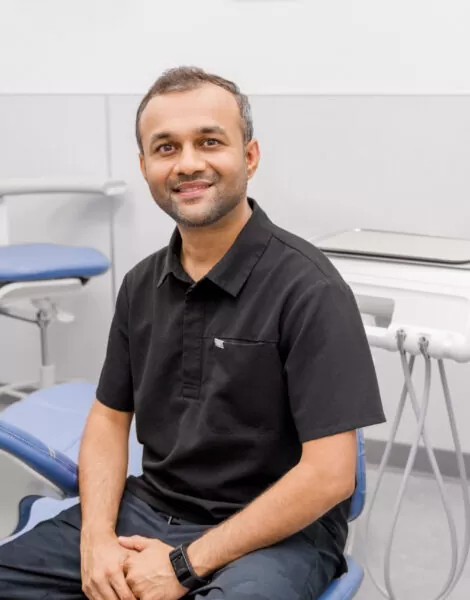
Dr. Dharmanshu Boghara
Dental Specialist
Dr. Boghara is a skilled dentist with over 15 years of experience, focused on delivering personalized and high-quality dental care. A graduate of Dharmsinh Desai University, he keeps his skills updated with modern techniques. Practicing in Calgary since 2014, he specializes in complex rehabilitations, prosthetic dentistry, and implant solutions. He is known for his calm and patient-friendly approach.
Related posts