Types of Sedation Dentistry Explained: Which Option Is Right for You?
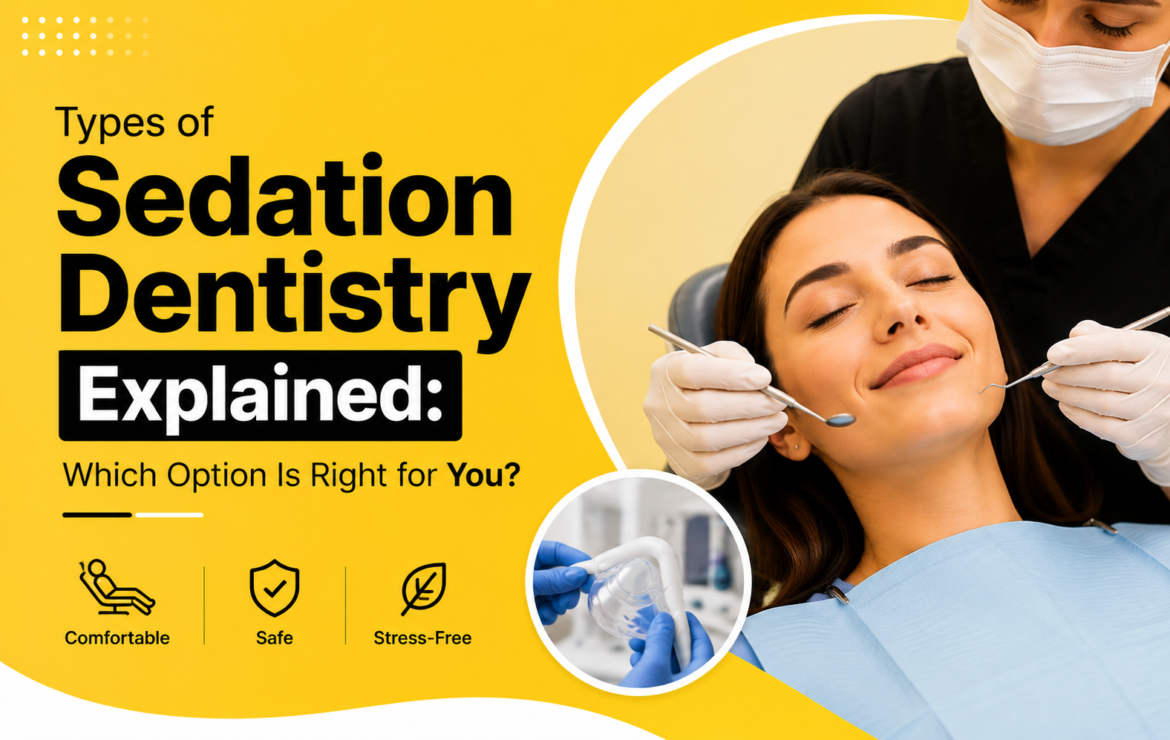
Types of Sedation Dentistry Explained: Which Option Is Right for You?

For many people, the hardest part of dental care isn’t the treatment, it’s getting through the door. If anxiety has ever made you cancel an appointment, sedation dentistry might be the missing piece.
Here’s how the main types work, and how to know which one fits you.
What Is Sedation Dentistry?
Sedation dentistry uses medication to help patients relax during treatment.
It’s not the same as general anesthesia, where you’re fully unconscious.
Most dental sedation keeps you breathing on your own, and often able to respond, while easing fear and tension.
The depth used depends on your anxiety level, medical history, and the procedure planned.
Why More Patients Are Choosing Sedation Dentistry
Dental anxiety is common, and avoiding care because of it tends to make small problems bigger and costlier.
Sedation removes that barrier, letting patients sit through treatment calmly instead of skipping it. It also lets dentists complete more work per visit, meaning fewer total appointments for larger treatment plans.
Why Is Sedation Dentistry Used?
Sedation isn’t only for people who consider themselves fearful.
It addresses a handful of specific, common challenges.
Common Reasons Patients Request Sedation
- Dental anxiety or phobia, including fear of needles or drills
- A strong gag reflex that makes treatment difficult
- Reduced response to local anesthetic
- Long or complex procedures, such as multiple extractions or implants
- Difficulty sitting still, relevant for some children and adults alike
- Past traumatic experiences at the dentist
Types of Sedation Dentistry Explained
Nitrous Oxide (Laughing Gas)
What Is It? A mild sedative gas inhaled through a small nasal mask.
How Does It Work? It takes effect in minutes, producing a light, relaxed feeling while you stay conscious. Oxygen afterward clears the gas quickly.
Best For Mild anxiety and shorter procedures like fillings or cleanings.
Benefits: Fast onset, fast recovery, no needles, and you can typically drive yourself home.
Oral Conscious Sedation
What Is It? A prescription sedative pill, usually taken about an hour before your appointment.
How Does It Work? The medication relaxes you before treatment starts. You’ll likely feel drowsy and may doze off, though you can usually be roused with a gentle prompt. Many patients remember little of the procedure afterward.
Best For Moderate to significant anxiety and medium-length procedures.
Benefits A deeper sense of calm than nitrous oxide, with no needle required.
IV Sedation
What Is It? Sedative medication delivered directly into the bloodstream through a small IV line.
How Does It Work? Because it enters the bloodstream directly, it works within seconds. Your dentist can adjust the dose throughout the appointment, with heart rate, blood pressure, and oxygen levels monitored continuously. Most patients recall little to nothing of the procedure.
Best For Severe anxiety, extensive treatment, or surgical procedures.
Benefits The most controllable, predictable depth of sedation available outside a hospital, with rapid onset.
Procedural (General) Sedation
What Is It? The deepest sedation level, bringing on a state close to or equal to sleep.
How Does It Work? Reserved for complex oral surgery, certain pediatric cases, or patients who can’t tolerate any awareness during treatment. It requires closer monitoring and, in some clinics, a specialist anesthesia provider.
Best For Major surgery or cases where lighter sedation hasn’t been enough.
Benefits Complete unawareness, which can make otherwise unmanageable treatment possible.
Sedation Dentistry Comparison: Which Type Is Right for You?
| Sedation Type | Administration | Awareness Level | Recovery Time | Best Suited For |
|---|---|---|---|---|
| Nitrous Oxide | Inhaled mask | Fully conscious | Minutes | Mild anxiety, short visits |
| Oral Sedation | Pill before visit | Drowsy, may doze | A few hours | Moderate anxiety |
| IV Sedation | IV line | Deeply relaxed or asleep | Rest of the day | Severe anxiety, longer work |
| General Sedation | Closely monitored | Unconscious | A full day or more | Major surgery, special cases |
Factors Your Dentist Will Consider
- Your anxiety level and dental history
- The length and complexity of the procedure
- Overall health, including heart, lung, or airway conditions
- Current medications
- Whether you have a driver available afterward
- Your age, particularly for older and pediatric patients
What to Expect Before, During, and After Sedation Dentistry
Beforehand, your dentist reviews your medical history and discusses the right method for you. Oral and IV sedation usually require fasting for several hours to reduce nausea risk.
During treatment, vital signs are checked regularly, especially with deeper sedation.
Afterward, nitrous oxide wears off within minutes, while oral and IV sedation can leave grogginess for hours, so arranging a ride home is essential.
Is Sedation Dentistry Safe?
Yes, when administered by a trained dental professional following proper protocols.
Regulatory bodies set strict training, certification, and monitoring requirements for each sedation level a dentist may offer.
Your dentist will review your health history closely beforehand, since some conditions and medications affect how safely sedation can be used.
Side effects, when they occur, are usually mild: drowsiness, nausea, or a brief headache that resolves within a few hours.
What Happens During a Sedation Dentistry Appointment?
Once sedation is administered, your dental team proceeds with treatment while monitoring your comfort and vital signs throughout.
A staff member typically stays with you for the entire visit if you’ve had oral or IV sedation.
Many patients are surprised by how smoothly the appointment goes, often with little memory of the more uncomfortable parts.
When Is Sedation Dentistry Most Beneficial
Sedation makes the biggest difference for lengthy or traditionally uncomfortable procedures. Root canals are a good example.
They have an unfair reputation for pain, but with sedation and local anesthetic together, most patients report only mild pressure.
It’s also valuable for wisdom tooth removal, multiple fillings in one visit, and emergency dental care, where stress is often already high before treatment begins.
For children, sedation can help with procedures requiring longer stillness than a young patient might otherwise manage, and pediatric sedation always involves monitoring suited to the child’s age and weight.
Which Sedation Dentistry Option Is Best for You?
There’s no universal answer, only the right fit for your situation.
Mild nerves may call for nothing more than nitrous oxide.
Moderate anxiety often responds well to oral sedation.
Severe phobia or demanding procedures tend to call for IV sedation.
The clearest path forward is a conversation with your dentist about your history, anxiety level, and the treatment ahead.
If dental anxiety has been holding you back, reach out to D’Arcy Dental in Okotoks to talk through sedation options built around your comfort.
FAQs
Which dental sedation option is best for anxiety?
Mild anxiety usually responds well to nitrous oxide. Moderate to severe anxiety often calls for oral or IV sedation, based on your dentist’s assessment.
How long does dental sedation last?
Nitrous oxide fades within 15 to 30 minutes. Oral and IV sedation can leave grogginess for several hours.
What procedures require dental sedation?
Root canals, wisdom tooth extractions, multiple fillings, implants, and emergency dental care are common candidates.
How much does sedation dentistry cost?
Costs vary by sedation type and procedure length. Nitrous oxide is the most affordable, oral sedation costs more, and IV sedation is typically the most expensive due to monitoring and equipment. Your dentist can give an estimate specific to your treatment.
How do dentists monitor patients during sedation?
For oral and IV sedation, the dental team tracks heart rate, blood pressure, and oxygen levels throughout the appointment, with trained staff present at all times to catch any sedation side effects early.

Dr. Siddharth Parikh
Dental Specialist
Dr. Siddharth Parikh is a dedicated general dentist with over 12 years of experience in family dentistry. A Bachelor of Dental Surgery graduate, he has been practicing in Alberta since 2017. He focuses on preventive care, conservative dentistry, and gentle treatment. Known for patient education and working closely with children and families, Dr. Parikh provides modern, high-quality dental care across clinics in Calgary.
Related posts