Habits to Avoid During TMJ Disorder Treatment
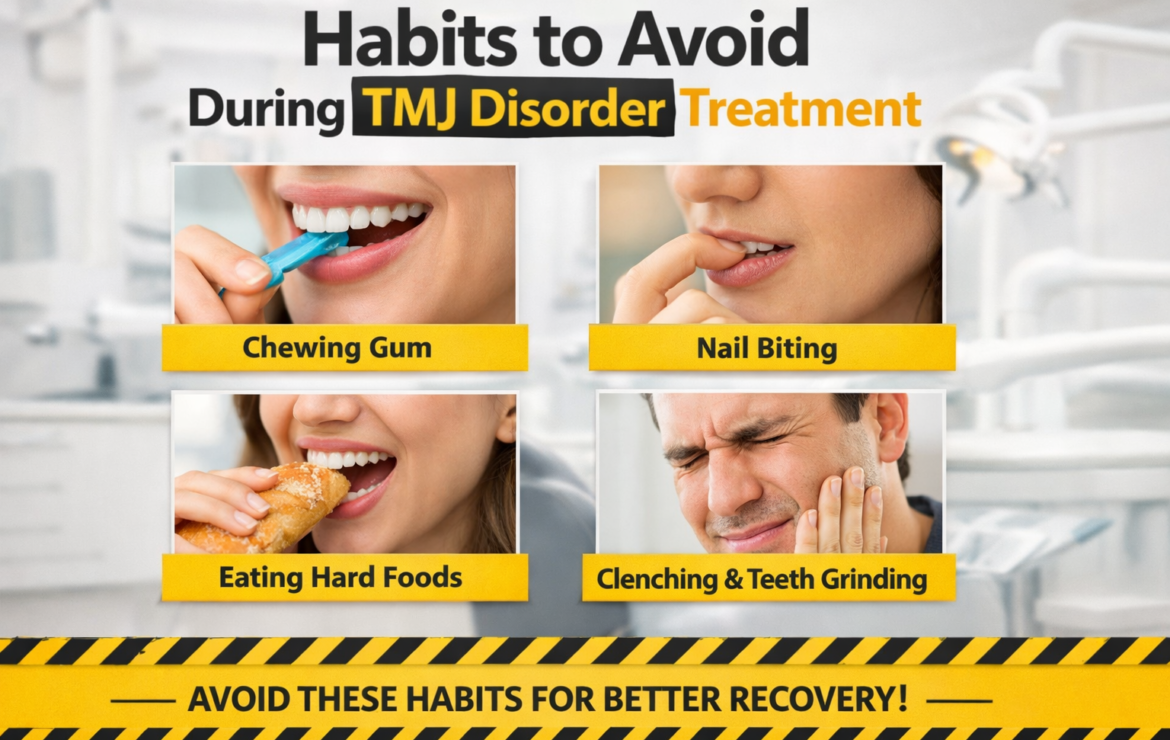
Habits to Avoid During TMJ Disorder Treatment

TMJ Treatment Mistakes You Should Avoid
- Habits like teeth grinding, jaw clenching, chewing gum, and nail biting place excessive pressure on the temporomandibular joint and can delay TMJ disorder treatment.
- Poor posture, stomach sleeping, and leaning your chin on your hand can strain jaw muscles, worsen jaw misalignment, and increase facial pain symptoms.
- Hard, crunchy, and chewy foods force the jaw to work harder, making TMJ inflammation, stiffness, and jaw locking more difficult to manage during recovery.
- Following healthy TMJ habits like eating soft foods, practicing proper posture, and keeping “lips together, teeth apart” can support faster jaw healing.
- Persistent jaw pain, headaches, ear ringing, or limited mouth opening may require professional TMJ treatment from a qualified dentist or TMJ specialist.
Living with jaw pain or a limited range of motion can make daily life feel like a chore.
If you have been diagnosed with temporomandibular joint disorder (TMD), you are likely already exploring various TMJ disorder treatment options.
However, even the most advanced clinical interventions can be undermined by small, everyday actions.
At D’Arcy Dental, we see many patients in Okotoks who are surprised to learn that their recovery is being stalled not by the treatment itself, but by unconscious behaviors.
Understanding the link between your daily routine and your jaw health is the first step toward lasting relief.
What Is TMJ Disorder and Why Habits Matter
The temporomandibular joint (TMJ) connects your jawbone to your skull.
This joint is responsible for talking, chewing, and yawning.
When this joint or the surrounding muscles become inflamed or misaligned, it results in TMJ disorder symptoms such as facial pain, earaches, and locked jaw.
While a dentist in Okotoks can provide professional care, the TMJ is under constant use.
This means your “off-office” habits dictate the environment in which the joint tries to heal.
If you are undergoing TMJ treatment but continue to stress the joint through repetitive motions, you are essentially taking one step forward and two steps back.
Quick Overview: Habits That Make TMJ Worse
- Repetitive chewing (gum, pens, fingernails).
- Structural strain (poor posture, stomach sleeping).
- Dietary triggers (hard, crunchy, or oversized foods).
- Stress-induced tension (clenching and grinding).
Top Habits to Avoid
Teeth grinding and clenching
Often occurring during sleep or high-stress moments, bruxism is the biggest enemy of TMJ disorder treatment.
Clenching puts immense pressure on the joint discs and wears down tooth enamel.
If you wake up with a dull headache or a sore jaw, you are likely grinding your teeth.
Chewing gum frequently
Gum might freshen your breath, but for a TMJ patient, it is an unnecessary workout for an already exhausted joint.
Continuous chewing causes muscle fatigue and keeps the joint in a state of constant friction, preventing inflammation from subsiding.
Eating hard or chewy foods
During recovery, your jaw needs “rest.”
Biting into a hard apple, chewing on tough steak or ice cubes forces the TMJ to exert maximum force.
This can lead to acute flare-ups and sharp pain.
Poor posture
It may seem unrelated, but your neck and back posture directly impact your jaw.
“Forward head posture”—common when looking at phones or computers—strains the muscles under the chin and pulls the jaw into an unnatural position.
This misalignment makes temporomandibular joint disorder harder to manage.
Nail biting or chewing objects
Chewing on pen caps or biting your nails forces the lower jaw to protrude forward in an awkward “edge-to-edge” bite.
This repetitive, unnatural positioning stresses the connective tissues within the joint.
Sleeping on the stomach
Sleeping face-down requires turning your head to one side.
This puts lateral pressure on the jaw for hours at a time, often pushing the mandible out of alignment.
Side sleeping can also be problematic if you rest your hand directly under your jaw.
Taking large bites of food
Opening your mouth too wide to eat a large sandwich can cause the joint to pop or lock.
For those with severe symptoms, overextending the jaw can even lead to a subluxation, requiring emergency dental care.
Healthy vs Harmful Habits for TMJ Recovery
| Category | Healthy Habit (Do This) | Harmful Habit (Avoid) |
|---|---|---|
| Nutritional Mechanics | Soft, nutrient-dense foods (smoothies, steamed greens, fish). | Hard, elastic, or brittle textures (ice, nuts, bagels, jerky). |
| Mandibular Rest | “Lips together, teeth apart.” The tongue rests on the palate. | Clenching during stress or grinding while focused. |
| Daily Ergonomics | Ears aligned over shoulders; use a headset for calls. | Leaning chin on hand; bracing phone with shoulder. |
| Sleep Hygiene | Back-sleeping with a contour pillow for neck support. | Stomach-sleeping or “arm-under-pillow” side sleeping. |
| Habits | Using tools (scissors/knives) for opening or cutting. | Biting fingernails or using teeth for opening packets or bottle caps. |
| Active Recovery | Gentle jaw stretching and heat/cold therapy. | Constant “testing” of the joint by clicking it on purpose. |
How These Habits Delay TMJ Treatment
When you visit a TMJ specialist near me, the goal is usually to reduce inflammation and retrain the muscles to function without pain.
However, the body cannot repair tissue that is being constantly reinjured.
For instance, if a dentist provides a custom night guard to stabilize your bite, but you spend your workday leaning your chin on your hand or biting your nails, the stabilization provided at night is neutralized by the daytime strain.
This leads to a cycle of chronic pain where treatment feels ineffective, when in reality, the joint is simply being overworked.
Tips to Replace Bad Habits
- The “Lips Together, Teeth Apart” Rule: Your teeth should only touch when you are eating. Throughout the day, check in with yourself. Ensure your jaw is relaxed and your tongue is resting gently on the roof of your mouth.
- Set Posture Reminders: If you work at a desk, set a timer every 30 minutes to roll your shoulders back and align your head over your spine.
- Opt for a “Soft Food” Phase: For two weeks, stick to smoothies, mashed potatoes, eggs, and steamed vegetables to give the joint a much-needed vacation.
When to See a TMJ Specialist
- Your jaw “locks” in an open or closed position.
- You experience persistent ringing in the ears (tinnitus) alongside jaw pain.
- The pain radiates into your neck or shoulders.
- You notice significant wear and tear on your teeth.
Professional TMJ treatment at D’Arcy Dental may include custom-fitted orthotics, bite adjustments, or referrals for physical therapy to address the root cause of the dysfunction.
Role of Professional Dental Care
At D’Arcy Dental, we believe that treating TMJ requires a partnership between the patient and the provider.
While we can offer clinical solutions to realign the bite and protect the teeth, your daily commitment to avoiding harmful habits is what ensures long-term success.
Our team focuses on identifying the specific triggers in your lifestyle during your consultation, providing a personalized roadmap to recovery.
Conclusion
Recovering from TMJ disorder is a cumulative process of professional intervention and personal discipline.
By eliminating habits like gum chewing, stomach sleeping, and jaw clenching, you create the physical space your body needs to heal.
If you are struggling with persistent jaw discomfort, don’t wait for the symptoms to become debilitating.
Contact a trusted dentist in Okotoks to discuss your options and get back to a life free from facial pain.
FAQs
What habits make TMJ disorder worse?
Any repetitive motion that stresses the jaw, such as clenching, grinding, biting nails, or resting your chin on your hand, can worsen inflammation. Poor posture and sleeping on your stomach also contribute to joint misalignment.
Can chewing gum worsen TMJ symptoms?
Yes. Chewing gum requires constant, repetitive muscle contractions that can lead to muscle fatigue and increased pressure on the joint disc, significantly delaying healing.
How can I stop clenching my jaw?
Awareness is key. Practice the “N-rest” position: place the tip of your tongue behind your upper front teeth (as if saying the letter N) and keep your teeth slightly apart. If clenching happens during sleep, a professional night guard is often necessary.
Is posture related to TMJ pain?
Absolutely. A forward-leaning head or slouched shoulders creates tension in the neck muscles, which are intrinsically linked to the muscles controlling your jaw. Correcting your posture can often reduce the intensity of TMJ symptoms.
What foods should I avoid with TMJ disorder?
Avoid “mechanical stressors” like chewy caramels, hard candies, tough meats, crunchy raw carrots, and large sandwiches that require you to open your mouth excessively wide.
Dr. Tejas Patel
Dental Specialist
Dr. Tejas Patel is a passionate dentist dedicated to providing patient-focused care with a gentle approach. A dentistry graduate of 2012, he has been practicing in Calgary since 2017 and offers treatments including crowns, root canals, extractions, bone grafting, and TMD care. He is known for his empathetic nature and focus on educating patients for long-term oral health.
Related posts