How to Cure TMJ Disorder Permanently with Effective Treatments

How to Cure TMJ Disorder Permanently with Effective Treatments

Permanent TMJ Disorder Relief: Effective Treatments
- TMJ disorder causes jaw pain, headaches, earaches, and limited movement.
- Stress, grinding, poor bite, trauma, and missing teeth trigger TMJ issues.
- Early diagnosis using exams and imaging prevents worsening symptoms.
- Treatments range from self-care and therapy to medications and injections.
- Dentures help restore bite balance and reduce strain on the TMJ.
- TMJ specialists create tailored plans for long-term pain relief.
Introduction
If every bite, yawn, or word you speak comes with pain, you’re not just imagining it, and you don’t have to live with it.
TMJ disorder affects the joint that connects your jaw to your skull, leading to symptoms like jaw pain, headaches, earaches, and difficulty moving your mouth.
Left untreated, it can affect your daily life in frustrating ways.
But there is good news.
Effective treatments are available, and many offer long-term relief.
But lasting results start with the correct diagnosis.
That’s why consulting a qualified TMJ specialist near you is essential.
In this article, we’ll explore how TMJ disorders can be treated and even cured with the right approach.
What Is TMJ Disorder?
The temporomandibular joint, also called the TMJ, connects your mandible with your skull.
This vital joint helps in your jaw movements while chewing, speaking, etc.
You have one joint on each side of your jaw.
TMJ disorders, often referred to as TMD, are a group of conditions that affect these joints and the muscles controlling jaw movement.
TMD can manifest in a variety of uncomfortable ways, including:
- Pain or tenderness in your jaw
- Aching pain in and around your ear
- Difficulty chewing or pain while chewing
- Your jaw may produce clicking, popping, or grinding sounds when opening or closing, which can occur with or without pain.
- Limited ability to open your mouth wide
The proper functioning of your TMJ is intrinsically linked to your overall oral health.
When the jaw joints aren’t working correctly, it can lead to teeth grinding (bruxism), uneven tooth wear, and even headaches.
Common Causes
TMD arises from a variety of factors.
Here are a few common causes:
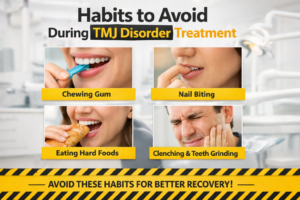
- Stress, jaw clenching, teeth grinding: When stressed, your body reacts by tensing muscles, including those in your jaw. This can lead to unconscious clenching during the day or grinding your teeth at night, putting immense pressure on the TMJ and surrounding structures.
- Poor bite, arthritis, trauma: An improper alignment of your upper and lower teeth can create an uneven bite, forcing your jaw into an unnatural position and straining the joint. Osteoarthritis and rheumatoid arthritis can also affect the TMJ, causing inflammation, pain, and the joint’s cartilage deterioration. Also, a direct blow to the jaw, or even prolonged periods of mouth opening (like during a dental procedure), can cause trauma that impacts the joint.
- Missing teeth may worsen symptoms: When teeth are absent, especially molars, the remaining teeth and jaw must compensate, leading to altered bite dynamics and uneven pressure distribution. This can cause the jaw to shift from proper alignment, placing additional stress on the TMJ. In such cases, getting missing teeth replaced at a denture clinic near you can be crucial in alleviating TMD and restoring proper oral function.
Diagnosis Process
Diagnosing a TMJ disorder starts with a comprehensive dental exam.
Your dentist will carefully assess your jaw, listening for clicks or pops, feeling tenderness in the joint and surrounding muscles, and observing your jaw’s range of motion.
They’ll also evaluate your bite and look for signs of teeth grinding or clenching.
Imaging techniques such as X-rays can reveal issues with the bony structures of the jaw, while a CT scan provides more detailed images of the bones.
Early diagnosis of TMD is crucial.
Identifying the problem allows for intervention before symptoms worsen or lead to more complex issues.
TMJ Disorder Treatments
a. Self-Care & Non-Invasive Options
Lifestyle changes: Simple adjustments like eating soft foods give your jaw a rest. Conscious efforts to reduce jaw clenching and practicing stress relief techniques significantly ease muscle tension. Applying moist heat or ice also helps.
Physical therapy and mouthguards: Physical therapy includes exercises to strengthen jaw muscles, improve motion, and correct posture. Mouthguards (oral splints) are custom-fitted devices, usually worn at night, to prevent grinding and clenching, evenly distribute bite forces, and help reposition the jaw for reduced TMJ stress.
b. Medications & Injections
NSAIDs, muscle relaxants: Over-the-counter or prescription NSAIDs (nonsteroidal anti-inflammatory drugs) are used to reduce pain and inflammation. For muscle spasms contributing to jaw pain, doctors may prescribe muscle relaxants.
PRP or corticosteroid injections for pain relief: For more targeted relief, specialists may use PRP (Platelet-Rich Plasma) injections to promote healing within the joint or corticosteroid injections directly into the TMJ for significant, though temporary, pain relief by reducing inflammation.
c. Surgical Options (Brief Mention)
When all else fails, arthroscopy, joint replacement (rare): Surgery is typically a last resort, considered when all other treatments have failed to provide relief. Procedures can range from minimally invasive arthroscopy (using a small camera to repair or remove inflamed tissue) to joint replacement in very rare and severe cases.
Role of Dentures in TMJ Relief
Missing teeth or a poor bite can significantly strain your jaw, contributing to or worsening TMJ disorders.
When your bite isn’t balanced, your jaw muscles and joints work harder, leading to discomfort.
Properly fitted dentures can be a key solution.
By replacing missing teeth and creating a balanced bite, dentures help support proper jaw alignment, reducing stress on the TMJ.
This allows muscles to relax and the joint to function more smoothly.
If you suspect missing teeth are impacting your TMJ, visit a denture clinic near you for an evaluation.
They can assess whether custom-fitted dentures can improve jaw alignment and relieve TMD.
When to See a TMJ Specialist
If you’re experiencing persistent jaw pain, clicking, or difficulty chewing, it’s time to consult a specialist.
These symptoms indicate your TMJ issue likely needs more than general care.
A dedicated TMJ specialist has advanced training and experience in diagnosing the nuances of these conditions and developing individualized treatment plans.
They can identify underlying causes and recommend therapies that address your specific needs, whether conservative management, custom oral appliances, or other interventions.
Look for a TMJ specialist near you to ensure proper intervention and prevent worsening symptoms.
Conclusion
Living with TMJ disorder doesn’t have to be a lifelong struggle.
While symptoms can be disruptive, TMD is manageable with proper care.
From self-care to specific treatments, effective solutions are available.
Early diagnosis and tailored treatment plans are key.
Addressing TMD promptly can prevent worsening symptoms and significantly improve your quality of life.
Don’t let chronic jaw pain persist.
At D’Arcy Dental Clinic, our sophisticated diagnostic equipment and board-certified dentists are ready to provide quality services.
Schedule a comprehensive dental exam to start your path toward lasting relief and a healthier, more comfortable jaw.
Dr. Tejas Patel
Dental Specialist
Dr. Tejas Patel is a passionate dentist dedicated to providing patient-focused care with a gentle approach. A dentistry graduate of 2012, he has been practicing in Calgary since 2017 and offers treatments including crowns, root canals, extractions, bone grafting, and TMD care. He is known for his empathetic nature and focus on educating patients for long-term oral health.
Related posts