What Happens If You Delay a Root Canal? Warning Signs and Risks
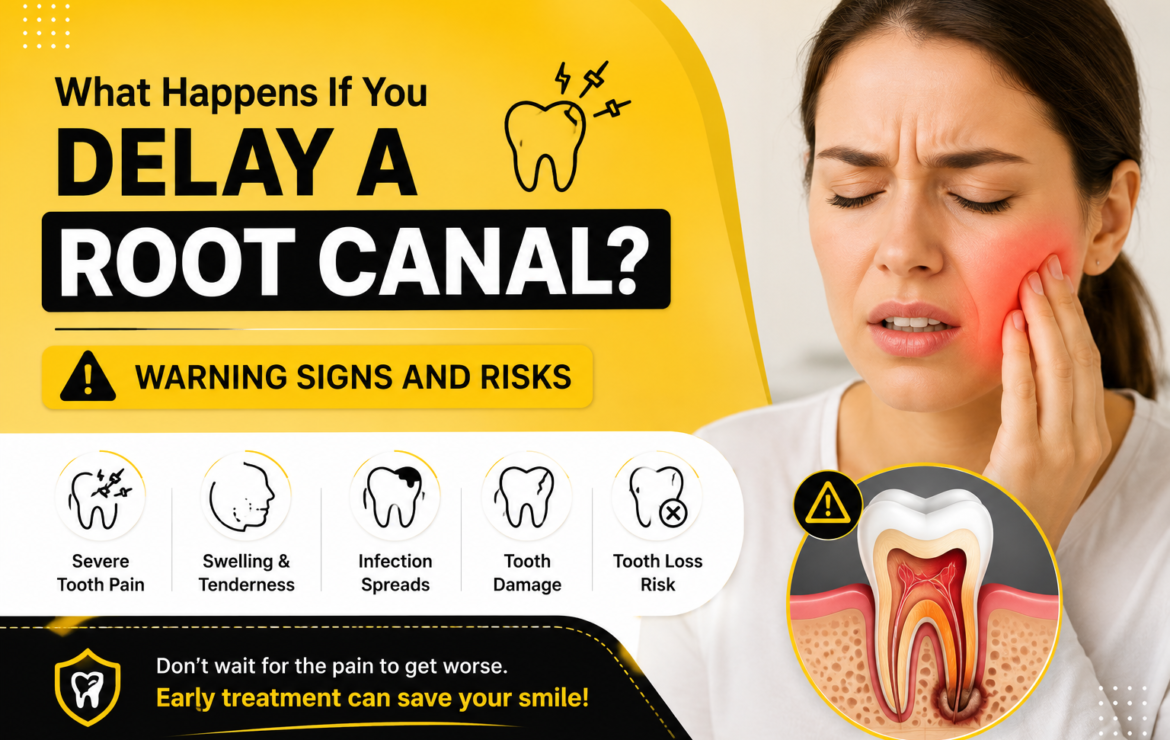
What Happens If You Delay a Root Canal? Warning Signs and Risks

A toothache rarely announces itself politely.
It builds, fades, then comes back stronger, and somewhere in that cycle, many people decide to wait it out.
At D’Arcy Dental in Okotoks, our team regularly sees the outcome: a tooth that once needed only simple root canal treatment ends up requiring more expensive care, all because of a delay in getting it treated.
Here’s what a root canal involves, the warning signs to watch for, and what really happens when treatment is postponed.
What Is a Root Canal and Why Would You Need One?
Inside every tooth is a soft core called the pulp, containing nerves and blood vessels.
If decay, a crack, or an injury reaches the pulp, it can become infected, and the infected pulp does not heal on its own.
Root canal therapy removes that infected tissue, cleans and disinfects the canals, and seals them to prevent reinfection.
The goal is simple: save your natural tooth rather than lose it to extraction.
Warning Signs You May Need a Root Canal Treatment
Common root canal symptoms include:
- Sharp or throbbing pain, especially when chewing
- Lingering sensitivity to hot or cold
- Swollen or tender gums around one tooth
- A small bump on the gum, which can signal an abscess
- Tooth discoloration
- A persistent bad taste near the area
Some infections cause little pain at first, which is why a comprehensive dental exam matters: it can catch trouble before symptoms do.
What Happens If You Delay a Root Canal?
A tooth infection does not stay contained just because the pain eases.
Fading pain often means the nerve has died, not that healing has occurred, while bacteria keep spreading underneath.
Left untreated, an infected tooth can lead to:
- A dental abscess, where pus collects at the root of the tooth
- Bone loss around the root that can weaken the jaw
- Infection spreading to neighbouring teeth and tissue
- Tooth loss, requiring extraction once the structure is too damaged to save
- Deep neck infections, such as Ludwig’s angina, which the Cleveland Clinic notes can, in rare but serious cases, threaten the airway and require emergency hospital care
- Bloodstream spread, adding strain on the body, particularly for people with diabetes or weakened immunity
Most short delays don’t end in an emergency, but risk climbs the longer an infected tooth goes untreated, and there’s no reliable way to predict the pace of a given infection from home.
Delay Risk Timeline
| Time Frame | What’s Happening | Risk Level |
|---|---|---|
| Day 1–3 | Mild to moderate pain, temperature sensitivity, slight tenderness when chewing | Low — treatable with a routine root canal |
| 1–2 Weeks | Pain becomes more constant; swelling or a gum boil may appear | Moderate — still treatable, symptoms worsening |
| 2–4 Weeks | Abscess may form; pain can radiate to jaw or ear; tooth may darken | High — risk of spread to bone and tissue increases |
| 1–3 Months | Bone loss around the root may begin; nearby teeth can be affected | Severe — treatment becomes more complex |
| 3+ Months | Risk of major bone damage, tooth loss, or infection spreading beyond the mouth | Critical — emergency care or extraction may be the only options |
This is a general guide, infections progress at different speeds.
If you have symptoms, the safest move is an assessment, not a wait-and-see approach.
How a Root Canal Specialist Treats an Infected Tooth
For more complex or advanced cases, your dentist may refer you to a root canal specialist, known as an endodontist.
These practitioners focus on diagnosing and treating problems inside the tooth, including complicated root structures and retreatments.
The approach is the same in principle: numb the area, access the infected pulp, clean and shape the canals, then seal them, with extra attention given to any bone involvement.
When Does a Delayed Root Canal Become a Dental Emergency?
Seek urgent care if you notice:
- Facial or neck swelling that is spreading
- Fever, chills, or feeling generally unwell alongside tooth pain
- Difficulty swallowing or breathing
- Severe pain that doesn’t respond to over-the-counter medication
Swelling combined with fever or breathing trouble is a medical emergency.
So it’s best to go to an emergency room, not just a dental clinic.
For other urgent symptoms, contact your dentist immediately.
Root Canal Procedure: What to Expect Step by Step
- Examination and X-ray to confirm the diagnosis and assess the bone.
- Local anaesthesia so the area is fully numb before treatment begins.
- Accessing the pulp through a small opening in the tooth.
- Removing the infected pulp tissue from the canal system.
- Cleaning and shaping the canals to prepare for filling.
- Filling and sealing with biocompatible material.
- Restoration, usually a crown, to protect the tooth going forward.
Root canal recovery is generally quick. Numbness wears off within a few hours, and most patients return to normal activities the same day, with only mild soreness afterward.
Cost of Root Canal Treatment in Okotoks, Alberta
Cost is one of the biggest reasons people delay treatment.
The Alberta Dental Association & College’s 2025 fee guide, which D’Arcy Dental references, prices root canal therapy by the number of canals involved: roughly $761 for one canal, $1,108 for two, and more for molars with three or four canals.
These figures cover the root canal itself, not the crown or filling typically needed afterward.
Actual fees vary by dentist, so a consultation will give you an accurate quote.
Many private dental insurance plans in Alberta cover part of root canal therapy, and the federal Canadian Dental Care Plan may help eligible residents with family income under $90,000 who lack private coverage.
Ask your dental office to clarify your specific costs before treatment.
Common Myths About Root Canal Treatment
- “Root canals are extremely painful.” With modern anaesthesia, the procedure feels similar to getting a filling — it relieves the pain caused by infection rather than creating it.
- “It’s better to just pull the tooth.” Saving a natural tooth, when possible, usually preserves function and appearance better than extraction, which can lead to bone loss and the need for a bridge or implant later.
- “If the pain stops, the infection is gone.” Reduced pain can mean the nerve has died while bacteria remain active.
- “Root canals make you sick elsewhere in the body.” This long-running claim isn’t supported by current research. Leaving an infection untreated poses the greater health risk.
Prevention: How to Avoid Needing a Root Canal
- Brush twice daily and floss once a day
- Keep up with regular dental exams and cleanings
- Address chipped or cracked teeth promptly
- Wear a mouthguard during contact sports
- Avoid chewing ice or other hard objects
Routine checkups remain one of the best ways to catch decay before it ever reaches the pulp.
Conclusion: Book Your Root Canal Consultation in Okotoks Today
Delaying a root canal rarely shrinks the problem.
It usually gives infection more time to spread and makes treatment more complex and costly.
If you’re dealing with tooth pain or swelling, a proper evaluation is far more reliable than guessing how serious it is.
At D’Arcy Dental in Okotoks, we assess your symptoms and provide root canal treatment designed to relieve pain and save your natural tooth.
If you are looking for a dentist in Okotoks, book your consultation with us today.
Frequently Asked Questions
How long can you wait before getting a root canal?
There’s no truly safe waiting period. Symptoms may feel manageable for a week or two, but the infection keeps progressing, so prompt evaluation is always best.
What are the warning signs you need a root canal?
Persistent tooth pain, lingering sensitivity to hot or cold, swollen gums, a bump on the gum, and tooth discoloration are the most common signs.
What is the difference between a root canal and extraction?
A root canal removes infected pulp and keeps your natural tooth. Extraction removes the whole tooth, usually requiring a bridge or implant afterward.
Does a root canal hurt?
The procedure itself is performed under local anaesthesia and feels similar to a filling. Most pain people associate with root canals comes from the infection beforehand.
Is a root canal covered by Alberta dental insurance?
Many private plans cover part of the cost, and the Canadian Dental Care Plan may help eligible residents without private coverage. Confirm specifics with your provider or dental office.

Dr. Tejas Patel
Dental Specialist
Dr. Tejas Patel is a passionate dentist dedicated to providing patient-focused care with a gentle approach. A dentistry graduate of 2012, he has been practicing in Calgary since 2017 and offers treatments including crowns, root canals, extractions, bone grafting, and TMD care. He is known for his empathetic nature and focus on educating patients for long-term oral health.
Related posts