Root Canal Infection Symptoms and What It Feels Like

Root Canal Infection Symptoms and What It Feels Like

Root Canal Infection Symptoms and What It Feels Like
- A root canal infection occurs when bacteria reach the tooth pulp due to decay, cracks, or injury.
- Early signs include sensitivity to hot or cold, mild pain while chewing, and gum tenderness.
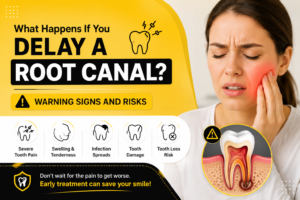
- Advanced symptoms may involve severe throbbing pain, swelling in the face or jaw, and a bad taste.
- A pimple-like bump on the gums or spreading pain to the ear or neck may indicate an abscess.
- Failed root canal signs include returning pain, tooth discoloration, and bite sensitivity.
- Immediate dental care is needed for severe pain, swelling, fever, or difficulty swallowing.
Introduction: What Is a Root Canal Infection?
Every tooth contains a soft center known as the pulp.
This area contains blood vessels, connective tissue, and nerves that help the tooth grow during its development.
A root canal infection occurs when bacteria breach the protective layers of enamel and dentin, reaching the pulp.
Once the pulp becomes infected or inflamed, it cannot heal on its own.
If left untreated, the infection can spread to the roots and eventually the surrounding bone, leading to an abscess.
What Causes a Root Canal Infection?
A root canal infection usually starts when bacteria enter the tooth through damage in the outer layers.
Common causes include untreated cavities, cracks in the tooth, repeated dental procedures on the same tooth, or trauma from an injury.
When decay or damage allows bacteria to reach the pulp, inflammation begins.
Over time, the pulp can become infected or die.
Once this happens, bacteria can move down the root canals and into the surrounding bone. Without treatment, the infection may continue to spread beyond the tooth.
What Are the First Symptoms of a Root Canal Infection?
Common early signs include:
- Sensitivity to hot or cold that lingers after the source is removed
- Mild to moderate tooth pain when chewing
- A dull ache that appears without a clear trigger
- Tenderness in the gums near a specific tooth
Some people describe the sensation as feeling pressure rather than sharp pain.
At this stage, discomfort may improve temporarily, even though the infection remains active beneath the surface.
Severe Symptoms of an Infected Root Canal
As the infection progresses, symptoms usually become more noticeable and persistent.
These signs often indicate that bacteria have moved deeper into the tooth or surrounding tissues.
Severe symptoms may include:
- Severe, throbbing tooth pain that interferes with your daily life
- Swelling in the gums, face, or jaw
- A pimple-like bump on the gum that may release fluid
- Pain that spreads to the ear, jaw, or neck
- A foul taste in the mouth that does not go away
How to Know If Your Previous Root Canal Is Failing
In some cases, a tooth that has already undergone root canal therapy can become reinfected. This may happen if bacteria were not fully eliminated, the filling material breaks down, or a new cavity forms.
Signs of a failing root canal may include:
- Pain returning months or years after treatment
- Sensitivity when biting or applying pressure
- Swelling or tenderness near the treated tooth
- Discoloration of the tooth
These symptoms do not always appear immediately.
A follow-up evaluation with a dentist or root canal specialist can help determine whether retreatment or another approach is needed.
When to See a Dentist Immediately
Certain symptoms should never be ignored, as they may indicate that the infection is spreading beyond the tooth.
Seek care right away if you experience:
- Facial swelling that increases quickly
- Fever along with dental pain
- Difficulty opening your mouth or swallowing
- Severe pain that does not improve with medication
An emergency dental clinic can assess whether the infection poses a broader health risk and begin treatment to control it.
How Dentists Diagnose a Root Canal Infection (Step-by-Step)
When you visit D’Arcy Dental with tooth pain, we follow a specific diagnostic process to ensure accuracy:
Digital X-rays: We look for dark spots at the tip of the tooth’s root, which indicate bone loss caused by an infection.
Percussion Testing: The dentist will gently tap on the tooth. An infected tooth is usually hypersensitive to this pressure.
Thermal Testing: We apply cold or heat to see how the nerve responds and, more importantly, how long the pain lasts.
Electronic Pulp Testing: A small tool may be used to check if the nerve is still vital.
Treatment Options for Root Canal Infection
The primary treatment for an infected pulp is root canal treatment.
This procedure removes the infected tissue, cleans the canals, and seals the space to prevent further bacterial entry.
In many cases, a crown is placed afterwards to restore strength and function.
If a previously treated tooth is infected, retreatment or referral to a root canal specialist may be recommended.
In advanced cases where the tooth cannot be saved, extraction may be discussed.
Prompt treatment helps stop the infection from spreading and reduces the risk of ongoing pain or bone damage.
Prevention Tips to Avoid Root Canal Infections
The best way to avoid complex procedures is through proactive care.
Maintain Hygiene: Brush twice a day and floss daily to prevent the decay that leads to infections.
Wear a Mouthguard: If you play contact sports or grind your teeth at night, a guard can prevent the fractures that allow bacteria to enter the pulp.
Routine Checkups: During a standard dental exam in Canada, your dentist can catch small cavities or failing fillings before they reach the nerve.
Conclusion
A root canal infection is a signal from your body that a tooth is in distress.
While the symptoms can be daunting, modern dentistry allows us to resolve the infection quickly and comfortably, saving the tooth and preventing the need for an extraction.
If you are noticing lingering sensitivity or a persistent ache, don’t wait for the pain to become an emergency.
At D’Arcy Dental, we are here to help you better understand your treatment options and get you back to feeling your best.

Dr. Tejas Patel
Dental Specialist
Dr. Tejas Patel is a passionate dentist dedicated to providing patient-focused care with a gentle approach. A dentistry graduate of 2012, he has been practicing in Calgary since 2017 and offers treatments including crowns, root canals, extractions, bone grafting, and TMD care. He is known for his empathetic nature and focus on educating patients for long-term oral health.
Related posts