
Children’s Dental Care Tips to Prevent Cavities and Tooth Decay
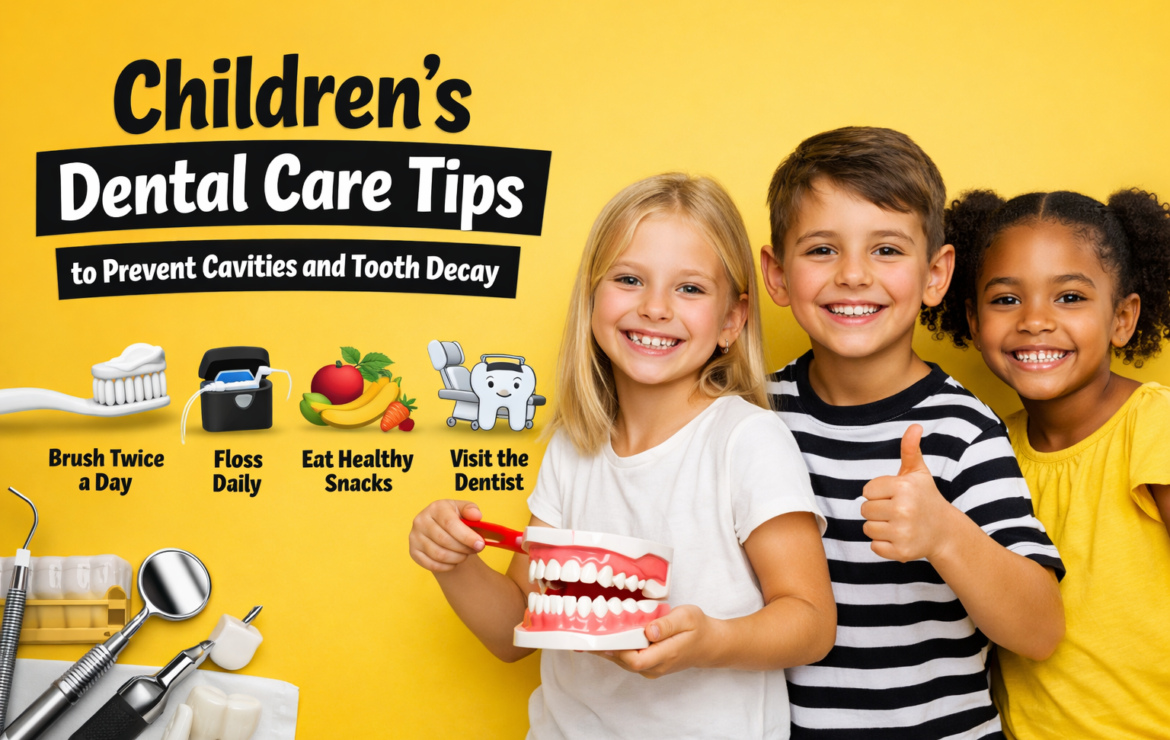
Children’s Dental Care Tips to Prevent Cavities and Tooth Decay

Children’s Dental Care Tips to Prevent Cavities
- Children’s dental care prevents cavities and tooth decay through early hygiene and consistent routines.
- Cavities form when bacteria convert sugars into acids that weaken tooth enamel.
- Brushing twice daily with fluoride toothpaste and parental supervision is essential.
- Limiting sugary foods and encouraging a balanced diet reduces decay risk.
- Regular dental visits and early prevention support long-term oral health.
Tooth decay remains one of the most common childhood health conditions.
In Canada, public health guidance consistently emphasizes that cavities are preventable with early and consistent care.
When left untreated, decay can lead to pain, infection, difficulty eating, and speech development problems.
Consistent children’s dental care habits at home, combined with regular professional visits, help protect both baby and permanent teeth.
For families seeking guidance from a children’s dentist whom Okotoks residents trust, early preventive care can significantly reduce the risk of future dental problems.
What Causes Cavities and Tooth Decay in Children
Cavities develop when bacteria in the mouth break down sugars from food and drinks.
This reaction releases acids that erode the tooth enamel.
Repeated acid exposure leads to small holes forming on the teeth.
Common contributing factors include:
- Frequent sugary snacks and drinks
- Prolonged bottle-feeding with milk or juice
- Inadequate brushing and flossing
- Limited fluoride exposure
- Skipping regular dental visits
Baby teeth are particularly vulnerable because their enamel is thinner than that of adult teeth. Decay can progress quickly if not identified early.
Daily Oral Hygiene Tips for Children
Children’s oral hygiene should begin even before the first tooth erupts.
From birth to 12 months
- Wipe gums gently with a clean, damp cloth after feedings.
- Toothbrushing should start as soon as the first tooth appears in the child’s mouth.
- Use a soft infant toothbrush with a smear (rice-sized amount) of fluoride toothpaste.
Ages 1 to 3
- Brush twice daily using a smear of fluoride toothpaste.
- Parents should perform brushing or closely supervise.
Ages 3 to 6
- Use a pea-sized amount of fluoride toothpaste.
- Teach children to spit out toothpaste.
- Begin flossing when teeth touch.
Children typically need help brushing effectively until around age 7 or 8.
Kids’ dental care at this stage requires supervision to ensure all surfaces of their teeth are cleaned properly.
Diet and Nutrition Tips to Protect Children’s Teeth
Diet strongly influences cavity risk.
Limit:
- Sticky candies and fruit snacks
- Sweetened beverages and juice
- Sugary cereals
- Frequent snacking throughout the day
Encourage:
- Fluoridated tap water
- Milk
- Cheese and yogurt
- Fresh fruits and vegetables
- Whole grains
Frequent exposure to sugar increases acid production.
Offering sweets with meals rather than as separate snacks reduces the chance of developing cavities.
To prevent decay, refrain from letting toddlers go to sleep with a bottle containing anything besides plain water.
Prolonged exposure to milk or juice can contribute to early childhood decay.
Preventive Dental Care Practices
Regular visits to a dental specialist are a cornerstone of long-term preventative health.
- Schedule the first dental visit by age one or within six months of the first tooth erupting.
- Continue regular checkups every six months unless advised otherwise.
- Ask about fluoride varnish treatments.
- Consider dental sealants for permanent molars once they erupt.
Sealants are protective coatings placed on the chewing surfaces of molars to prevent decay in deep grooves.
An Okotoks family dentist can monitor oral development, identify early signs of decay, and provide guidance specific to your child’s risk factors.
Age-Wise Dental Care Tips
Infants (0–1 year)
- Clean gums daily.
- Avoid bedtime bottles with milk or juice.
Toddlers (1–3 years)
- Establish a consistent brushing routine.
- Encourage cup use instead of prolonged bottle use.
Preschoolers (3–5 years)
- Continue supervised brushing.
- Reinforce healthy snack choices.
School-age children (6+ years)
- Ensure proper brushing of permanent molars.
- Begin daily flossing once teeth contact.
- Discuss sports mouthguards if applicable.
Each stage requires adjustments in children’s dental care routines.
Healthy Habits That Prevent Tooth Decay
Long-term oral health depends on consistent habits:
- Brush twice daily for two minutes.
- Floss once daily when teeth touch.
- Drink water after meals and snacks.
- Replace toothbrushes every three months.
Routine builds predictability and reduces resistance around brushing time.
Signs of Early Cavities Parents Should Watch For
Early detection prevents more serious complications.
Parents should monitor for:
- White chalky spots on teeth
- Brown or dark discolouration
- Sensitivity to cold or sweet foods
- Complaints of tooth pain
- Swelling of the gums
- Persistent bad breath
If a child develops facial swelling, severe pain, or trauma to the mouth, contact an emergency dental clinic promptly for evaluation.
How Parents Can Build Strong Dental Habits
Children learn best through modeling and routine.
- Brush and floss together as a family.
- Use a timer to ensure two full minutes of brushing.
- Keep dental visits positive and calm.
- Offer non-food rewards for consistent brushing.
- Schedule regular checkups with a kids’ dentist.
A supportive approach encourages cooperation and reduces dental anxiety.
D’Arcy Dental provides family dental care designed to support children at each stage of development.
Conclusion
Preventing cavities in children starts with simple daily habits—twice-daily brushing with fluoride toothpaste, limiting sugary snacks and drinks, and keeping up with regular dental visits.
When these steps are followed consistently, most tooth decay can be avoided.
For families looking for a children’s dentist in Okotoks that parents can rely on, D’Arcy Dental offers comprehensive, age-appropriate care in a supportive environment.
Our team focuses on preventive education, early diagnosis, and gentle treatment to help children feel comfortable during visits.
Beyond pediatric services, D’Arcy Dental caters to the entire household by providing everything from routine checkups and repairs to cosmetic and urgent treatments in a single office.
FAQs
What is the main cause of cavities in children?
Cavities are caused by bacteria that break down sugars and produce acids that damage tooth enamel. Frequent sugar intake and inadequate brushing increase risk.
What foods help prevent cavities in children?
Water, milk, cheese, yogurt, and fiber-rich fruits and vegetables support oral health. Limiting sugary snacks and drinks reduces acid exposure.
What are the early signs of cavities in children?
White spots on teeth, brown discoloration, sensitivity, and complaints of tooth pain are common early signs.
How often should children visit the dentist?
Children should visit the dentist at least twice a year or every six months. This helps catch dental problems early and prevents complications in the future.

Dr. Siddharth Parikh
Dental Specialist
Dr. Siddharth Parikh is a dedicated general dentist with over 12 years of experience in family dentistry. A Bachelor of Dental Surgery graduate, he has been practicing in Alberta since 2017. He focuses on preventive care, conservative dentistry, and gentle treatment. Known for patient education and working closely with children and families, Dr. Parikh provides modern, high-quality dental care across clinics in Calgary.
Related posts


